Oct 19, 2026
What is a “Bad Broker”? What is a “Bad Importer”?
CBP has said it directly: if you are a bad broker or a bad importer, expect scrutiny. The more common problem is less dramatic than fraud and much harder to deal with.
Event
OCT. 27th 12:00 PM ET
By Hugo Pakula · May 18, 2026
In January 2026, US Customs and Border Protection issued HQ Ruling H350722. The ruling clarified, for the first time at the agency level, what artificial intelligence is and is not permitted to do in the entry lifecycle.
For importers and brokers evaluating AI tools, the ruling is the single most important piece of regulatory guidance issued in this space. It draws a clear statutory boundary, and that boundary determines which AI features are safe to deploy and which create liability.
HQ H350722 addresses the application of 19 CFR to AI-driven tools. The ruling restates what counts as "customs business" under existing federal regulation, then applies that definition to AI systems.
Customs business, per 19 CFR, includes any activity involving transactions with CBP concerning the entry and admissibility of merchandise. Specifically:
The ruling is explicit. AI tools cannot perform customs business in the entry lifecycle. The plain reading is that automated systems are not permitted to make the legally binding determinations that licensed customs brokers are authorized to make.
For any AI tool that touches the entry process, the ruling creates a hard stop on several specific activities:
The ruling does more than restrict. It clarifies where AI can legitimately operate, and the clarification is significant.
The permissible path is a product database model. AI is permitted to assist with classification, valuation, country of origin, and compliance screening when the work is happening in advance of an entry. The work lives in the importer's product database, ERP, OMS, or other internal system.
In this model, AI does not perform customs business. It maintains a clean, current, defensible product master. When an entry is later filed, a licensed broker references that database to make the final determination.
This is the path that delivers the operational benefit of AI without crossing the statutory line. The work shifts from "the AI files the entry" to "the AI keeps your product master compliant, current, and audit-ready."
The ruling makes vendor evaluation easier in one specific way. Any vendor whose product diagram includes "the AI files the entry" or "the AI computes the duty" is offering a product that violates federal regulation. That should end the conversation.
Useful AI in trade does several things, none of which involve filing the entry itself:
Each of these activities supports the entry lifecycle without performing customs business as defined by 19 CFR.
The ruling reinforces a requirement that already existed in practice. Every determination needs to be defensible. When CBP follows up on an entry, the importer or broker has to produce the reasoning, the data, and the citations behind a given classification, valuation, or origin call.
AI tools that produce determinations without source citations, without confidence scoring, and without an audit trail create exposure even when used in the permissible path. A product database populated by an AI that cannot explain its own decisions is not defensible.
For any AI tool entering a trade compliance tech stack, the minimum bar is:
Without these three properties, the AI is producing plausible answers that cannot be defended under scrutiny.
For importers and brokers already using AI tools in trade work, the ruling requires a quick audit.
HQ H350722 did not break new ground. It applied existing 19 CFR definitions to a new class of tools. The ruling is consistent with the broader trajectory of customs enforcement: more scrutiny, better detection, and a higher bar for defensibility.
The ruling is also clarifying in a constructive way. It tells the market exactly where AI belongs in the entry lifecycle and where it does not. For vendors who built their products around legitimate use cases (product database accuracy, screening, scenario modeling, audit support), the ruling validates the model. For vendors who marketed end-to-end automation of the entry filing process, the ruling forces a redesign.
Importers and brokers should be reading the ruling not as a restriction but as a clarification. The permissible path is broad, the operational benefit is real, and the boundary is now drawn in writing.
Oct 19, 2026
What is a “Bad Broker”? What is a “Bad Importer”?
CBP has said it directly: if you are a bad broker or a bad importer, expect scrutiny. The more common problem is less dramatic than fraud and much harder to deal with.
Oct 6, 2026
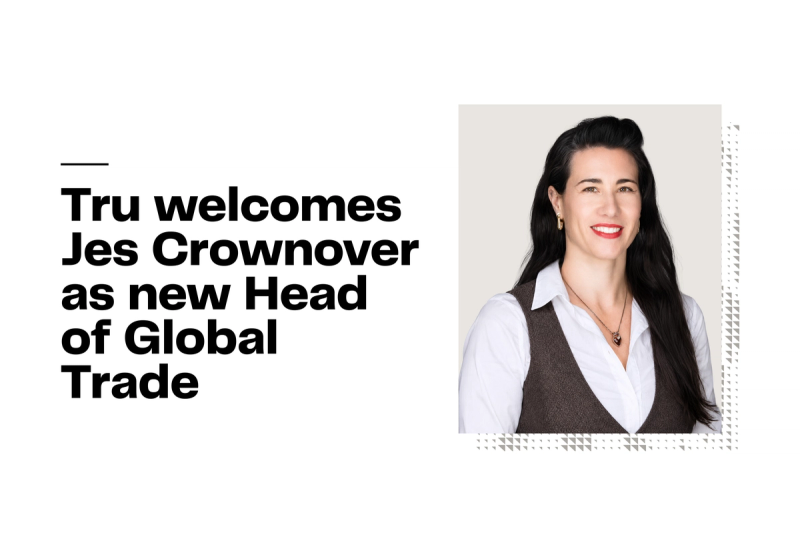
Press Release: Jes Crownover Joins Tru as Head of Global Trade
Former FedEx and Livingston executive joins Tru to build the trade infrastructure for the future of imports.
Oct 6, 2026
Q&A with Jes Crownover: Why I Joined Tru
Jes Crownover discusses why trade compliance's future belongs to those who combine expertise with technology.

©2026 Tru Identity, Inc. All rights reserved.