Oct 6, 2026
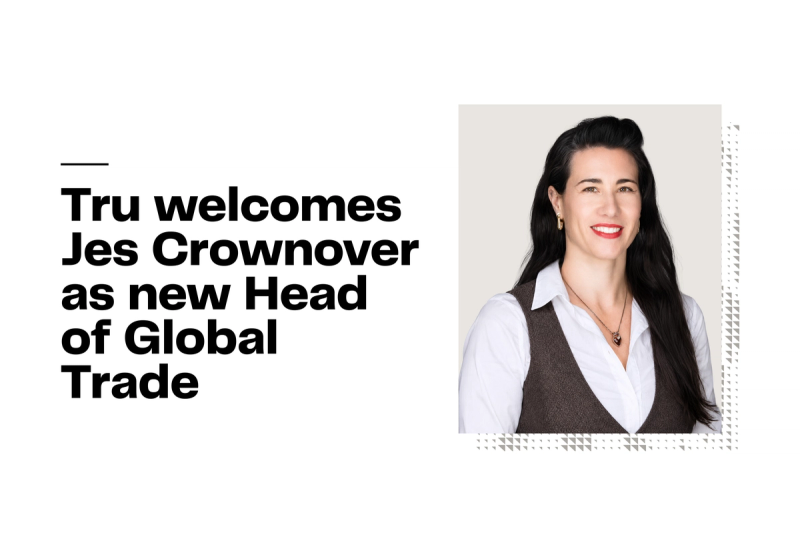
Press Release: Jes Crownover Joins Tru as Head of Global Trade
Former FedEx and Livingston executive joins Tru to build the trade infrastructure for the future of imports.
Event
OCT. 27th 12:00 PM ET
By Henry Carey · Aug 25, 2026
AI answers with confidence. Ask whether it's sure, and it backs down. A system that changes its answer the moment you question it is not something a license holder can defend to CBP. Accuracy was never the standard. Supervision is, and that requires a decision matrix your license holder writes, sees, and controls.
AI answers with confidence. But when you ask if it's sure, it backs down and gets uncertain. A system that changes its answer the moment you question it is not something a license holder can defend to CBP.
Your license holder controls three settings. Together they shape how the system behaves across your whole book of business.
1. Pick your level of scrutiny. This sets what the system looks at and how deep it goes on each entry. You can go deep where the risk is without spending the same effort on routine shipments you already know well.
2. Pick your level of strictness:
You can set it differently by client, by commodity, or by risk level.
3. Match the system to your business. You already have escalation paths, review thresholds, and a sign-off structure. The matrix mirrors what you have instead of pushing your team into a workflow not built for your brokerage.
CBP ruled that a tool, whether it uses AI or not, does not count as a "person" under 19 CFR 111.1. The classification decision for imported goods has to come from a licensed customs broker, not from an automated system on its own. How advanced the system is does not change that.
The problem was that the software provider decided what counted as relevant entry data. Software making decisions counts as customs business, and the decision-making has to belong to a licensed broker. That is the purpose of the decision matrix, and it is why it is something you can see and control instead of something hidden in computer code you cannot change.
Your license holder stays in control. The rules the system follows are rules they wrote and can defend. That answers the supervision question with structure, not a policy statement.
Nothing runs in a black box. When something goes wrong, you can see what caused it and why. That visibility is what makes the speed defensible. AI helps when it works, but the reason you can move faster is that you can trace what happened.
Your whole staff follows one workflow. The matrix puts your standard operating procedure into the system itself instead of a training doc nobody follows. Your newest entry writer can be held to the same standard as your most senior one.
You can handle every client differently without running a different process for each one. The client-specific rules live in the matrix, so they are not stuck in the head of whoever happened to onboard that account.
The bottom line? The decision matrix is how you get the accuracy and the volume without giving up the supervision that protects your license.
For a fuller breakdown of how to evaluate AI tools against your supervision obligations, download the Guide to AI in Trade Compliance →
Oct 6, 2026
Press Release: Jes Crownover Joins Tru as Head of Global Trade
Former FedEx and Livingston executive joins Tru to build the trade infrastructure for the future of imports.

Oct 6, 2026
Q&A with Jes Crownover: Why I Joined Tru
Jes Crownover discusses why trade compliance's future belongs to those who combine expertise with technology.
Oct 1, 2026
The Data Behind Every CAPE Refund
For eligible importers, IEEPA refunds create a meaningful opportunity to recover money. But CBP is not issuing those refunds based on a high-level evaluation. It is reviewing the entry data behind every claim.

©2026 Tru Identity, Inc. All rights reserved.